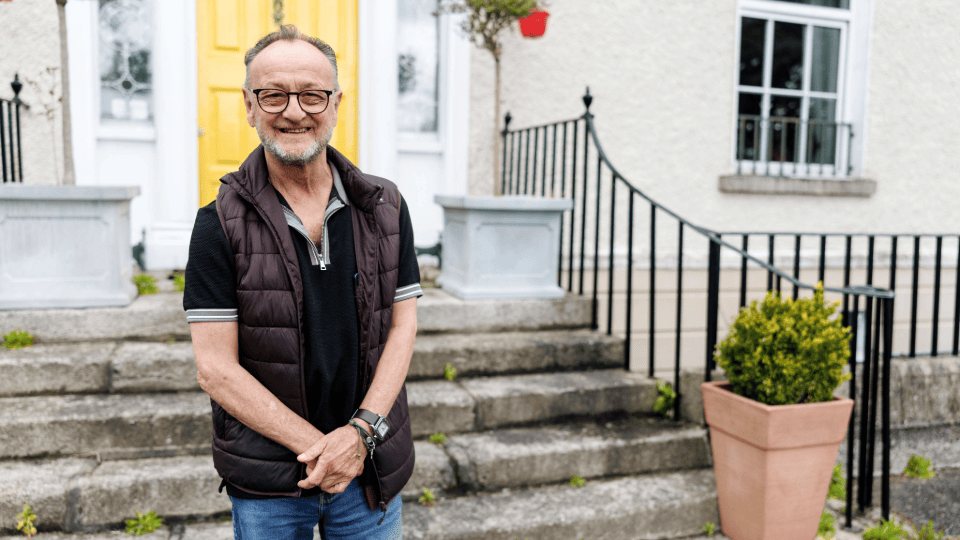
John’s Story:
When I arrived at Riversdale, I immediately felt the difference in my life. After years of moving between hostels, often sharing space with many others, having a room of my own was a huge change. You know, it’s the simple things like that that mean so much. I am now in my late sixties and have experienced homelessness twice. I’ve always rented, but last time, the house was sold, and that was it. I ended up without a home and back in hostels. At Riversdale, everything has changed. I find here a sense of dignity, and I feel independent once again. This is like being out there in the real world. If you have a bad day, you can go to your room, close the door and take that time. It makes a huge difference. Safety is also central. After years without stability, having consistent support and a secure environment has been very important in allowing me to settle. Over time, Riversdale has become more than accommodation. It is a place where I’ve built relationships and where I find myself supported as part of my everyday life. They teach you about family, these people, both staff and my fellow residents. For me, home is no longer just about having a place to stay. It is about stability, dignity and the support needed to live well. At my age, you realise sometimes you need help. And here, thanks to Dublin Simon, I have it.
Housing Sustainment- A Core Strategic Pillar
Securing a home is only part of the solution to homelessness. For many, the real challenge is sustaining it. Core life skills and habits that support stability are often lost during periods of homelessness or sleeping rough. Other factors, such as age, mobility and ill health, can make it even more challenging. Dublin Simon’s approach recognises that long-term stability requires the right level of ongoing, tailored support to ensure that people can live safely, independently and with dignity over time. In 2025, this was strengthened by enhancing the housing sustainment model and expanding the supports available to residents across services.
Our goal is to deliver services to sustain people who experienced, or are at risk of experiencing, homelessness in long-term accommodation.
Read the full report here: https://www.dubsimon.ie/annual-impact-report-2025
Initiatives:
High Long-Term Supported Accommodation: For those who are unable to live independently.
Designed for individuals who are not in a position to live independently, these services provide a stable home alongside the support needed to manage health conditions and to rebuild their capabilities and daily routines. Medical supports are often key to sustaining someone in their home. In 2025, 188 people were supported through these services, with 53 new residents, including pregnant women, people recovering from addiction, or those dealing with the myriad of physical and mental health conditions related to their previous homelessness. After a successful submission for funding to the Health Service Executive (HSE), Dublin Simon managed to directly recruit healthcare assistants for Oak and Chester House, replacing outsourced agency care staff, offering more consistent care for some of our more vulnerable clients. Work is grounded in a simple principle: these are not just services, but homes, where they can live with privacy and choice, including at their most vulnerable stages of life. This included supporting residents with end-of-life care within their homes. Staff have been trained, both internally and externally, to support clients so they can remain in familiar surroundings with appropriate clinical and emotional support.
Riversdale: Support for Over 55s Riversdale provides permanent, high-support accommodation for 20 men and women over the age of 55.
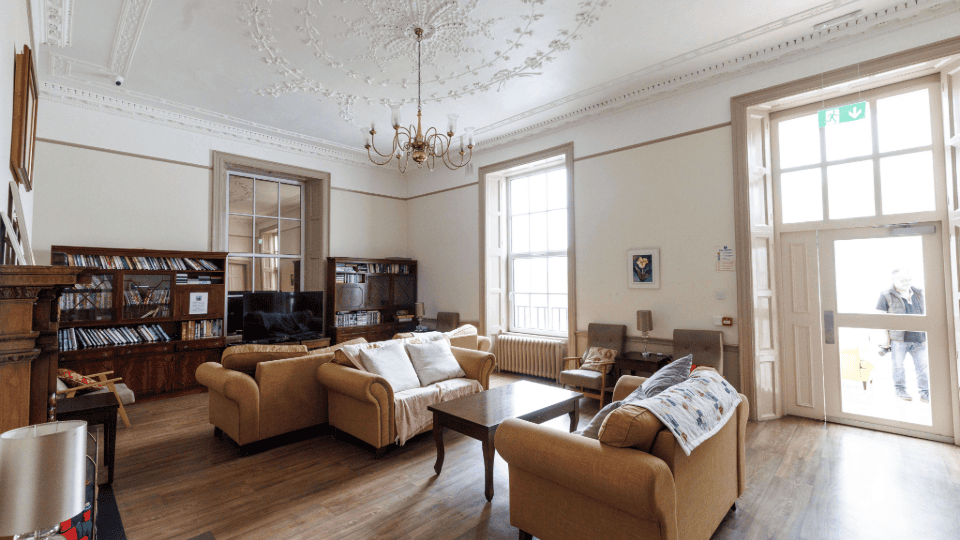
As part of Dublin Simon Community’s Housing Sustainment pillar, it supports individuals whose health, mobility or life circumstances mean independent living is no longer possible. Designed for long-term living, the service combines permanent housing with 24/7 on-site support. Staff are always present, alongside volunteers and the Dublin Simon Primary Care Nursing Team, and with external healthcare professionals visiting regularly. This integrated model supports both physical and mental wellbeing, while enabling residents to live as independently as possible.
Daily life reflects this balance. Residents maintain their own routines, attend appointments, and spend time in shared or private spaces. Communal meals, healthcare support and social activities are part of the service, alongside quieter, independent moments. For many residents, settling in a permanent home takes time. Experiences of homelessness can mean individuals arrive feeling unsure about joining a new community. Building trust is therefore central to the service, with consistent support helping residents to feel secure and settled over time.
Riversdale is also embedded in the local area and community, contributing to a sense of connection and belonging for residents. As part of Dublin Simon’s wider housing sustainment approach, Riversdale demonstrates the role of long-term, high-support accommodation in enabling people to remain housed. For older people in particular, this model is essential to maintaining stability, improving health outcomes, and supporting long-term wellbeing. The yellow door at Riversdale represents that stability — a place where people can live with dignity, security and a sense of belonging.
Medium Long-Term Supported Accommodation: For men and women who are able to live semi-independently with low support needs.
Residents in Medium Support Long-Term Accommodation (LTA) receive support with day-to-day life skills, health and welfare, education and training, while support staff also provide assistance with addressing issues such as loneliness and social isolation. In 2025, 79 individuals lived in our services at Dorset Street, Canal Road, Kilmantin Hill and Seán McDermott Street. Many residents have a history of sleeping rough or using emergency accommodation and benefit from assistance and structures to re-develop skills that would enable them to live independently once again. Staff are on site during the day in medium-support LTA to support residents with any issues they may have and in progressing in their own personal development goals.
In 2025, engagement was increased with social activities organised by the Client Development Team, including trips to the cinema and zoo, highlighting the importance of social wellbeing in our overall approach to health. In Dorset Street, two apartments were refurbished in 2025 – one of which is specifically designed for couples, allowing two people who both experienced homelessness to remain living together while accessing any on-site support they might individually need.
Visiting Support Services: Tenancy establishment and visiting support to those exiting homelessness, extending supports and tenancy advice to address those at risk in existing tenancies.
Dublin Simon’s Visiting Support Services extend housing sustainment to the community, helping people to maintain their tenancies after leaving homelessness. This ranges from helping them engage with their landlords or neighbours, assistance with finance and form-filling, to addressing complex medical and mental health needs. In 2025, extending the work in this area, Dublin Simon successfully tendered for a new contract for the Dublin area, merging Support to Live Independently (SLI) and Tenancy Information Support Service (TISS) into the new service called Dublin Visiting Tenancy Sustainment Service (VTSS), operational for Fingal, South Dublin and Dún Laoghaire-Rathdown, while Tenancy Support Service (TSS) continues to offer support for Cavan, Kildare, Louth, Meath, Monaghan and Wicklow. This is driven by the increasing time required to secure suitable accommodation, due to the shortage of housing stock to meet the needs of clients, as well as acknowledging the diversity of support people may need as they maintain a tenancy. By providing the right accommodation, with the right combination of practical and medical supports, we have developed a model that helps people transition out of homelessness permanently. Properly supported tenants regain stability and experience improved mental and physical health. The wider communities they become part of benefit too, and our approach reduces pressure on public service.
Visiting Support Service: Extending support, sustaining tenancies. Securing a home is only part of the journey. For many, the real challenge begins afterwards: managing rent, navigating services, rebuilding routines, and addressing health or social needs that may have contributed to homelessness in the first place. Without the right support, tenancies can break down – and people can quickly find themselves back in crisis. The Visiting Support Service was developed to respond to that reality. With a new contract signed in September 2025, this saw the merger of two services: Support to Live Independently (SLI) and Tenancy Information Support Service. (TISS) into the Dublin Visiting Tenancy Support Service (VTSS), serving clients across Fingal, South Dublin and Dún Laoghaire-Rathdown, while our Tenancy Support Service (TSS) continues to offer support for Cavan, Louth, Meath, Monaghan and Wicklow.
Dublin VTSS provides practical, hands-on support to individuals and families in their own homes after they exit homelessness. This includes help with budgeting, linking into healthcare and local services, building independent living skills, and offering regular, trusted contact at a critical stage of resettlement. VTSS also provides a prevention element to the service, as referrals can include those already housed but at risk of losing their tenancies. The service also reflects a key strategic shift. Previously, SLI supports were typically time-limited to six months. However, as needs became more complex – particularly for older people, those new to the country and those who have experienced homelessness for extended periods of time – it became clear that shorter interventions were often not enough to sustain a tenancy. VTSS now allows for support of up to one year, with each case assessed within the first 12 weeks to determine whether support can be stepped down or needs to be extended. This ensures a more tailored, person-centred approach, giving people the time and stability required to build a home. This process is managed through ongoing robust assessment of the needs of each unique individual or family, which is repeated during the case timeline, in conjunction with our stakeholders, to ensure all supports are continually reviewed.
Read the full report here: https://www.dubsimon.ie/annual-impact-report-2025